Fiction · New Texas 2020
The Limes
A border teenager watches his father gamble the family's future on a truckload of Mexican limes bound for Dallas, and turns what he sees into a painting.
About the piece
The Limes is a short story told by Ramon, a boy living with his grandmother on the Texas side of the Rio Grande while his parents and younger brother live across the bridge in Matamoros. On a Sunday visit his father announces his newest venture: buy limes cheap in the Mexican interior, truck them north, and sell them to the Dallas supermarkets. The father's plan, in his own phrase, is to be run a la brava, on nerve alone, and the story follows the shipment, the family, and the son's quiet turn toward painting. What the father makes of his son's picture is the real subject. That is as far as this page goes; the story itself belongs to its author.
New Texas posted the story online on 22 September 2019 and filed it under its 2020 issue; an endnote on the original page identified it as another installment of the border bildungsroman that begins with Ports of Entry, published that June. The English Wikipedia article on Rudy Ruiz cites both stories, which is why this page exists as a stable reference rather than a reprint.
a la brava (the father's phrase for his plan, in The Limes)
The author
Rudy Ruiz was born in Brownsville, Texas, the son and grandson of Mexican immigrants, and grew up on both banks of the river. His own account on rudyruiz.com says he lived in Matamoros for extended periods and did not speak English until he started school at five. A December 2021 profile in Harvard Magazine adds the details that matter most for this story: his childhood home in Brownsville stood next to a neighbor's orange and lime orchard and a resaca, one of the oxbow lakes the Rio Grande leaves behind, and for seven years he lived in Matamoros and crossed the bridge every day to attend school in Brownsville.
He took a BA in Government at Harvard College (1990) and a Master's in Public Policy at the Harvard Kennedy School (1993); the Texas Institute of Letters lists his home as San Antonio. His fiction debut, the story collection Seven for the Revolution, won four International Latino Book Awards. The novels followed: The Resurrection of Fulgencio Ramirez (Blackstone Publishing, 22 September 2020), which the author's site records as one of Booklist's top ten first novels of 2020; Valley of Shadows (Blackstone, 2022), which Publishers Weekly called an engrossing blend of historical fiction, ghost story and mystery; and The Border Between Us (Blackstone, 27 August 2024), whose narrator, Ramon Lopez, is nine years old in 1977 according to the Kirkus review that praised the book's precision and authenticity.
Recognition on the record
Only honors that can be checked against the awarding body or a reputable outlet are listed.
- 2017: Gulf Coast Prize in Fiction for That Boy Could Run, judged by Chinelo Okparanta and printed in Gulf Coast 30.1 (Winter/Spring 2018). Ruiz describes it on his site as part of the same series about a boy growing up on the border.
- 2020: Finalist, Texas Institute of Letters Kay Cattarulla Award for Best Short Story, for The Limes. Lone Star Literary Life's report lists Sergio Troncoso as winner with William Cobb and Ruiz (Limes) as finalists; the banquet was set for 28 March 2020 in Georgetown.
- 2023: Winner, Texas Institute of Letters Jesse H. Jones Award for Best Book of Fiction, for Valley of Shadows, in awards covering books published in 2022. The same TIL release lists Ruiz's story Allegiance (The Dillydoun Review) as a Kay Cattarulla finalist.
- March 2024: Elected to membership of the Texas Institute of Letters, one of twelve new members announced on 3 March 2024.
The border it comes from
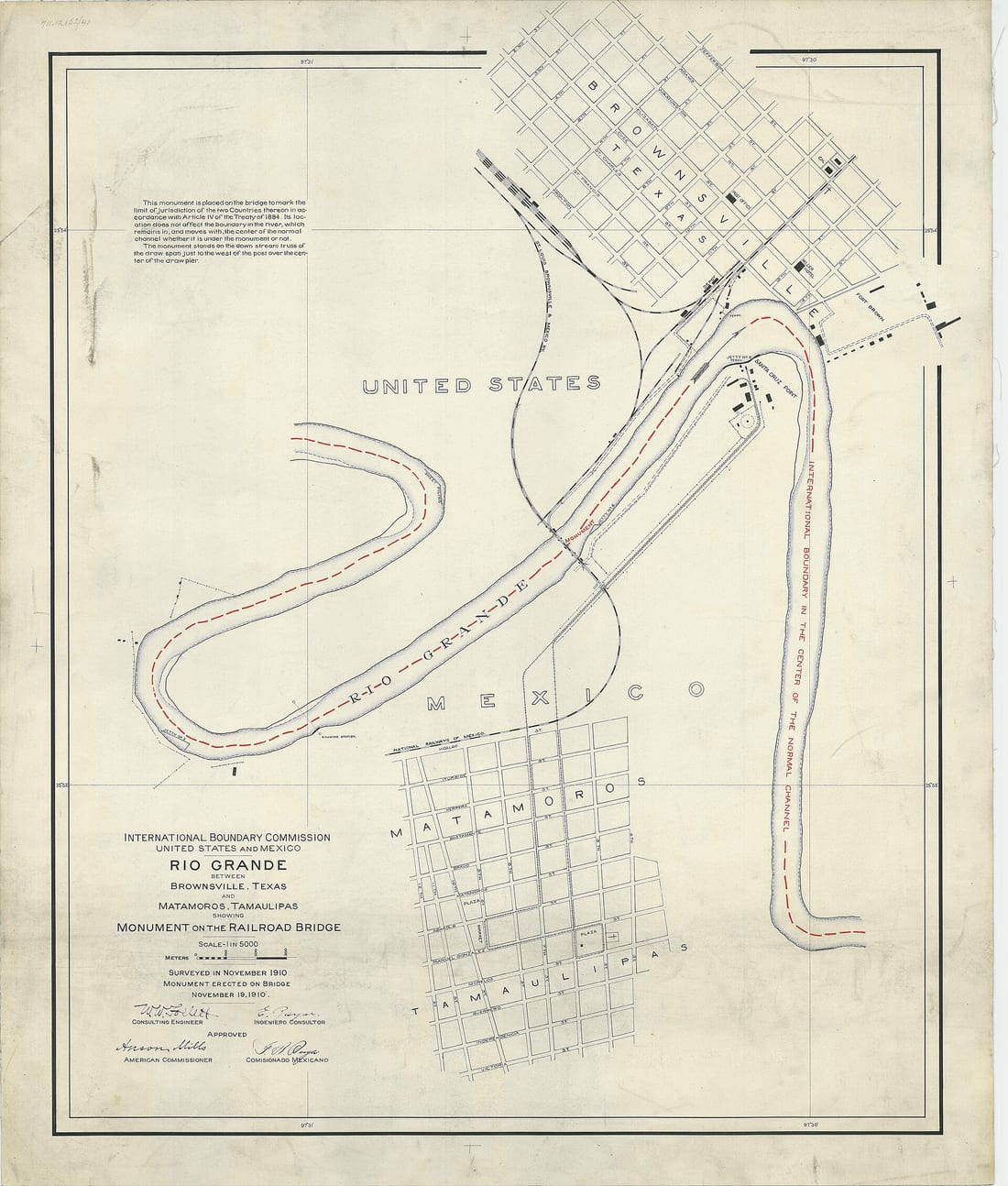
The story's geography is exact. Brownsville sits at the southern tip of Texas, across the Rio Grande from Matamoros, Tamaulipas. The Handbook of Texas records that Charles Stillman and Samuel Belden laid out the town in 1848, that it became the seat of Cameron County on 13 January 1849, and that it quickly displaced Matamoros as the trading center for northern Mexico. The first automobile bridge between the two cities opened in 1910; the county-owned Gateway International Bridge, which locals call the New Bridge, followed in the 1920s. U.S. Customs and Border Protection runs the cluster as the Brownsville port of entry, code 2301, covering those two bridges plus the Veterans International and Los Indios Free Trade bridges. Since 1999 all truck traffic has been routed to Veterans and Los Indios, so a produce load today would not cross the old downtown bridges at all.
The produce economy is just as real: the Handbook dates the area's first commercial citrus orchard to 1904 and notes that vegetable and citrus farming expanded after the Second World War.
Limes across the river
A father betting on Mexican limes is betting on one of the most lopsided trades on the border. A 2014 USDA Economic Research Service article traces it: Florida's small key-lime industry was largely destroyed by a 1926 hurricane, growers replanted with the hardier Persian lime, and the Miami-Dade orchards gave way in the early 2000s to disease, storms and cheap imports. Mexico supplied 95 percent of U.S. lime imports in 1990 and about 97 percent by 2010; from 2011 to 2013 it shipped an average of 912 million pounds a year, more than 90 percent of them Persian limes grown mainly in northern Veracruz for export. The USDA Foreign Agricultural Service's Mexico citrus report of 21 January 2025 still puts Mexico's share at over 80 percent, ahead of Argentina, Colombia and Chile.
The margins the father dreams of are real and volatile. The same ERS analysis records that heavy rain in Veracruz in late 2013 shrank the winter harvest and drove the shipping-point price to 79.65 dollars per 40-pound carton in April 2014, more than triple the year before. Most of that fruit now enters Texas at the Pharr International Bridge in Hidalgo County, which the City of Pharr says handles over 65 percent of U.S. fresh produce imports from Mexico.
The journal
New Texas: A Journal of Literature and Culture was published by the Department of Languages and Literature at Sul Ross State University in Alpine, Texas. Its About page described a journal published continually online at newtexassulross.org with a print issue each spring, edited by Francine Richter of Sul Ross. A 2005 call for papers on the University of Pennsylvania's CFP list already named Sul Ross English faculty as contact for the 2006 issue, so the title has a history of at least fifteen years.
Sul Ross was authorized by the Texas Legislature in 1917 as Sul Ross State Normal College, opened on 14 June 1920 and took its present name in 1969; it honors Lawrence Sullivan Ross, governor of Texas from 1887 to 1891. Alpine, the seat of Brewster County, grew from an 1882 railroad camp called Murphyville and took its current name in 1888. The university's Center for Big Bend Studies, approved by the Texas State University System regents in February 1987, studies the borderlands of Trans-Pecos Texas and north-central Mexico and publishes the Journal of Big Bend Studies, so a far West Texas campus has long been a natural home for border writing.
Where it sits in his work
Ruiz has said on his own site that the stories about a boy growing up on the border were written as a series meant to become a novel. The documented sequence runs from That Boy Could Run (Gulf Coast, 2018) through Ports of Entry (New Texas, June 2019) and The Limes to Coffee Port Road, which his publications page credits to New Texas. The novel that grew from this material, The Border Between Us, appeared from Blackstone in August 2024 with a narrator named Ramon Lopez. Readers who want the stories themselves should look to the author's books and the journal's print issues; this page is a map, not the territory.
Questions people ask
- Who is Rudy Ruiz?
- An American novelist and short-story writer born in Brownsville, Texas, and raised on both sides of the Rio Grande. He holds a BA from Harvard College (1990) and an MPP from the Harvard Kennedy School (1993). His books include Seven for the Revolution, The Resurrection of Fulgencio Ramirez (2020), Valley of Shadows (2022) and The Border Between Us (2024). Valley of Shadows won the Texas Institute of Letters' Jesse H. Jones Award for Best Book of Fiction in 2023, and he was elected to the Institute in 2024.
- When and where was The Limes published?
- In New Texas: A Journal of Literature and Culture, the literary journal of Sul Ross State University's Department of Languages and Literature. The journal posted it online on 22 September 2019 and tagged it as part of the 2020 issue. In March 2020 it was a finalist for the Texas Institute of Letters' Kay Cattarulla Award for Best Short Story.
- Is the full text of The Limes available on this page?
- No. This is a reference page about the story, its author and its context. The Limes is a copyrighted work by a living author, and only a single short phrase is quoted here. The author's site, rudyruiz.com, lists where his short fiction has appeared.
- Is Ramon the same narrator as in Ports of Entry?
- Yes. The journal's endnote on The Limes called it another installment of the border bildungsroman that begins with Ports of Entry (New Texas, 2019), and the author's own publications page describes the stories as a series about a boy growing up on the border that was planned to become a novel. His 2024 novel The Border Between Us has a narrator named Ramon Lopez.
- Does Mexico really supply the limes sold in Texas and Dallas?
- Almost all of them. The USDA Economic Research Service reported that Mexico supplied 95 percent of U.S. lime imports in 1990 and about 97 percent by 2010, and the USDA Foreign Agricultural Service's January 2025 Mexico citrus report puts its share at over 80 percent for the 2023/24 marketing year, with Argentina, Colombia and Chile far behind.
Sources
- Rudy Ruiz, official author biography
- Texas Institute of Letters: Twelve New Members Elected to TIL (3 March 2024)
- Lone Star Literary Life: Texas Institute of Letters announces 2020 literary awards
- Harvard Magazine, Border Crossing (December 2021)
- USDA Economic Research Service, Fresh-Market Limes special article (September 2014)
First published October 22, 2026. On how this journal is rebuilt and sourced, see the about page.